Serverless Architecture in 2026: The Smartest Way to Build Scalable Applications Without Infrastructure Headaches
Apr 29th, 2026
Why Modern Businesses Are Moving Beyond Traditional Servers
In today’s software economy, speed is everything.
Businesses want applications that launch faster, scale instantly, stay available under unpredictable traffic, and most importantly — do all of this without burning infrastructure budgets. Traditional server-based deployment models are increasingly failing to meet these expectations because they demand constant provisioning, maintenance, patching, monitoring, and scaling decisions.
This is exactly why Serverless Architecture has become one of the most powerful cloud engineering shifts of 2026.
At Incognitai Solutions, we see serverless not merely as a hosting option, but as a smarter application-building philosophy where businesses focus entirely on product innovation while cloud providers handle the backend infrastructure complexity.
What Exactly Is Serverless Architecture?
Despite the name, servers do exist but your business no longer needs to manage them.
In a serverless model, cloud platforms automatically provision compute resources only when an application request occurs. Instead of paying for machines running 24/7, organizations pay only for actual execution.
That means:
- no server setup,
- no manual scaling,
- no operating system maintenance,
- no idle infrastructure cost,
- and significantly reduced DevOps overhead.
Your developers write the business logic.
The cloud handles availability, scaling, patching, runtime health, and request distribution.
This shift is one of the key reasons AWS and other hyperscalers continue investing heavily in serverless-native ecosystems, with enterprise adoption accelerating across API platforms, event processing systems, SaaS products, and AI-driven applications.
Why Enterprises Are Rapidly Choosing Serverless in 2026
The conversation around serverless has matured.
A few years ago, serverless was viewed as ideal only for lightweight APIs and simple backend functions. Today, it powers:
- customer-facing SaaS platforms,
- payment workflows,
- real-time notifications,
- image and document processing,
- intelligent automation systems,
- event-driven analytics,
- and even production-grade AI inference pipelines.
Large engineering teams are embracing serverless because it solves three critical business problems at once:
1. Faster Deployment
Applications can move from development to production in days instead of weeks because infrastructure provisioning disappears from the deployment timeline.
2. Automatic Scalability
Whether 100 users or 1 million users hit the system, the architecture expands automatically without manual intervention.
3. Massive Cost Optimization
Instead of paying for idle virtual machines, organizations pay per request, per execution, and per database usage.
Recent real-world migrations continue to report cloud cost reductions ranging from 70% to 80% when workloads are shifted intelligently from traditional always-on servers to serverless event-based functions.
The Core Blueprint of a Modern Serverless Application
A production-ready serverless architecture is not a single tool — it is a coordinated ecosystem of managed cloud services.
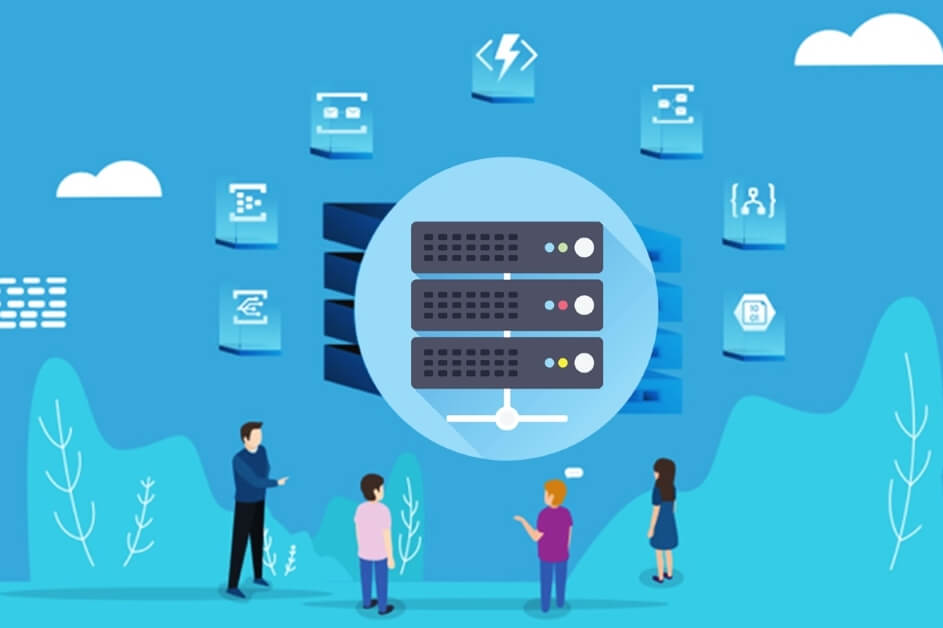
API Gateway – The Front Door
This service receives every client request, validates traffic, handles authentication, manages rate limiting, and routes the call securely to the backend logic.
Function Compute (AWS Lambda / Cloud Functions) – The Brain
This is where your actual business logic lives. Functions execute only when triggered and shut down immediately after completion.
Serverless Database – The Persistent Layer
Modern NoSQL engines such as DynamoDB allow applications to read and write data on demand without managing database servers.
Monitoring & Event Services – The Nervous System
Logs, alerts, queues, retries, and event orchestration ensure the platform remains observable, resilient, and self-healing.
Together, these components create an event-driven application model that is agile, modular, and operationally lean.
Why Serverless Fits Perfectly with AI and High-Traffic Digital Products
One of the biggest reasons serverless is dominating cloud architecture discussions this year is because AI products generate highly unpredictable traffic patterns.

Some minutes may have zero requests.
Some minutes may have thousands of inference calls.
Keeping traditional servers alive for this variability becomes financially inefficient.
Serverless compute solves this by activating only when demand exists — making it ideal for:
- AI chat systems,
- recommendation engines,
- automated image processing,
- webhook integrations,
- scheduled data pipelines,
- and burst traffic SaaS applications.
AWS itself has been pushing advanced serverless patterns specifically for generative AI workloads, proving that this architecture is now production-ready far beyond simple CRUD APIs.
But Serverless Is Not Just About “Cheap Cloud”
This is where many companies misunderstand the concept.

Serverless is not valuable only because it reduces cost.
Its bigger advantage is architectural freedom.
Teams no longer waste engineering hours on:
- instance patching,
- CPU scaling rules,
- load balancer tuning,
- uptime maintenance,
- deployment machine configuration.
That engineering bandwidth gets redirected toward customer features, automation intelligence, security improvements, and faster product experimentation.
The 2026 Reality: Smart Serverless Beats Blind Serverless
However, mature cloud engineering now recognizes one truth — serverless must be designed strategically.

At hyperscale traffic, poor request orchestration, excessive logging, or badly designed API routing can create unnecessary cost spikes. This is why modern serverless architecture requires intelligent planning around function granularity, observability, cold-start optimization, and event flow design.
So the winners are not businesses that simply “move to Lambda.”
The winners are businesses that build optimized serverless systems with performance engineering in mind.
How Incognitai Solutions Approaches Serverless Engineering
At Incognitai Solutions, we design serverless applications for one purpose:
maximum scalability with minimum operational friction.
Our architecture strategy focuses on:
- event-driven backend systems,
- cost-efficient cloud deployment,
- secure API orchestration,
- low-maintenance database models,
- intelligent observability,
- and future-ready AI compatibility.
Because in the modern digital market, businesses do not need more servers.
They need more speed, more resilience, and less infrastructure burden.
Final Thoughts
Serverless Architecture is no longer a trend reserved for startups.
It has become one of the most practical and financially sustainable ways to build modern applications in 2026.
When done right, it offers:
- faster release cycles,
- near-infinite scalability,
- reduced DevOps dependency,
- lower infrastructure cost,
- and cleaner product-focused engineering.
The future of software is not about managing machines.
It is about building systems that manage themselves.
And serverless is leading that transformation.
Future-Proof Your Business with Incognitai
Stay ahead in today’s digital-first world with next-gen IT solutions and smart digital marketing strategies from Incognitai.
Unlock your brand’s potential with technology that drives growth, streamlines efficiency, and powers innovation for the future.
📧 Email: admin@incognitai.com
📞 Call: +91 99522 89956
Let’s engineer your IT success, today.