
Debugging Distributed Systems: Why Modern Applications Break in Silence
May 26th, 2026
The Hardest Bugs Are the Ones You Can’t See
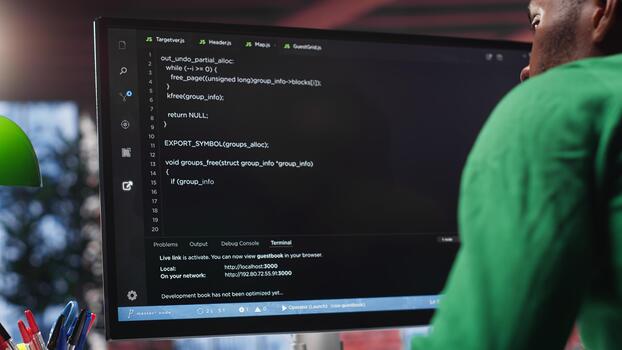
There was a time when debugging meant opening one server log, finding the error, fixing the code, and moving on.
Not anymore.
Modern applications are no longer built as single systems. They operate through dozens of interconnected services, APIs, databases, cloud functions, and containers working together behind the scenes. While this architecture makes applications faster and more scalable, it also creates a new challenge for developers and DevOps teams invisible failures.
In distributed systems, the actual problem rarely appears where the issue starts.
A customer may experience a slow application, but the real cause could be hidden inside a completely different service buried deep within the infrastructure. That’s what makes distributed debugging one of the most frustrating and time-consuming tasks in modern engineering.
When Everything Looks Fine… But Nothing Actually Works
One of the biggest problems with distributed systems is that failures travel quietly.
A request may move through multiple services like this:
Frontend → API Gateway → Authentication Service → Payment Service → Database
If one service suddenly slows down or fails silently, every other system around it may still appear healthy.
To the user, the app feels broken.
To the engineer, the logs look normal.
This disconnect is what turns simple debugging into hours of investigation.
Traditional debugging methods simply don’t work anymore because engineers are no longer tracking one system they’re tracking entire conversations happening across infrastructure.
Why Observability Has Become a Necessity?
Modern DevOps teams no longer rely only on logs.

Today, debugging depends heavily on observability the ability to understand what’s happening inside a system in real time.
Instead of manually searching for clues, teams now use tools that provide:
- End-to-end request tracing
- Centralized logging
- Real-time monitoring
- Automated alerts
- Performance insights
These tools help engineers move from guessing to knowing.
Distributed Tracing: Following the Full Story
One of the most effective solutions for debugging distributed systems is distributed tracing.
Tools like AWS X-Ray allow teams to visualize how a request moves across services. Instead of checking systems individually, engineers can see the entire request journey in one place.
This changes everything.
For example, an API response taking two seconds may initially feel impossible to diagnose. But tracing tools can instantly reveal:
- Which service handled the request
- Where delays occurred
- Which API call failed
- How much time each service consumed
What once required hours of manual investigation can now be identified within minutes. Distributed tracing gives engineering teams something extremely valuable:
clarity.
Centralized Logging: One Place for Every Error
Another major issue in distributed systems is scattered logs.

Without centralized logging, developers often waste time:
- Connecting to multiple servers
- Searching logs manually
- Comparing timestamps
- Trying to correlate unrelated events
This process becomes chaotic very quickly.
Centralized logging platforms like CloudWatch Logs solve this problem by bringing every log into a single searchable environment.
Instead of hunting across systems, engineers can instantly search:
- Error messages
- Timeout failures
- Service crashes
- Warning patterns
- Request IDs
This dramatically reduces debugging time while improving operational visibility.
Monitoring Before Customers Complain
The strongest engineering teams don’t wait for users to report problems.

They detect issues before users even notice them.
Monitoring systems and intelligent alerts now help organizations track:
- Latency spikes
- Error rates
- Memory usage
- CPU overload
- Failed requests
- Unusual traffic behavior
When something abnormal happens, alerts are automatically sent through Slack, email, or incident management platforms.
This proactive approach allows teams to react faster, reduce downtime, and maintain customer trust.
The Shift From Reactive to Intelligent Debugging
Modern debugging is no longer reactive.

Engineering teams are now building systems that can:
- Detect anomalies automatically
- Predict potential failures
- Correlate system behavior
- Identify root causes faster
- Reduce manual troubleshooting
The focus is shifting from “finding bugs” to building infrastructure that explains itself.
This is the real evolution happening in DevOps today.
Why Distributed Debugging Matters More Than Ever
As businesses continue adopting cloud-native architectures, microservices, Kubernetes, and serverless platforms, debugging complexity will only increase.

That means visibility is no longer optional.
Organizations that invest in observability and modern debugging practices gain:
- Faster incident response
- Better system reliability
- Improved customer experience
- Lower operational stress
- Stronger engineering efficiency
In complex systems, speed matters.
But understanding matters even more.
Final Thoughts
Distributed systems are incredibly powerful, but they also introduce a level of complexity traditional debugging cannot handle.
The future of engineering belongs to teams that can observe systems clearly, trace failures quickly, and solve issues before they become disasters.
Because in modern infrastructure, the most dangerous problems are rarely the loudest ones.
Incogitai Solutions
Engineering intelligent cloud, DevOps, and scalable technology solutions for modern businesses.
Future-Proof Your Business with Incognitai
Stay ahead in today’s digital-first world with next-gen IT solutions and smart digital marketing strategies from Incognitai.
Unlock your brand’s potential with technology that drives growth, streamlines efficiency, and powers innovation for the future.
📧 Email: admin@incognitai.com
📞 Call: +91 99522 89956
Let’s engineer your IT success, today.